 |
Northern Mine Research Society Registered Charity 326704 |
Leadhills & Wanlockhead Mines
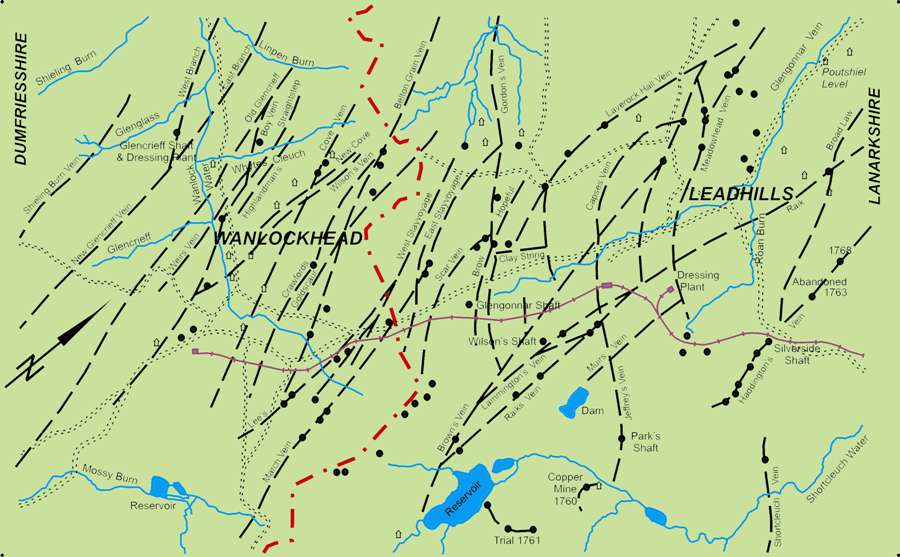
These mines are high in the Lowther Hills and can be reached from the A76 near Sanquhar or the A702 at Abington. The veins, which are controlled by faulting, were mined to depths of over 425 metres (1,300 feet). They are in brecciated greywackes, surrounded by Ordovician greywackes, black shales and cherts. Mineralization occurred during the Carboniferous era, around 350 million years ago.
Between 1700 and 1958, the mines produced 400,000 tonnes of lead, 10,000 tonnes of zinc and 25 tonnes of silver; in addition, the area's stream sediments were a source of gold. The mines in the two villages were worked separately, however, because the minerals in Wanlockhead belonged to the Dukes of Buccleugh, and those in Leadhills to the Earls of Hopetoun.
The mines at Leadhills were working lead ore by the mid thirteenth century, but most recorded activity in the 15th and 16th centuries relates to the search for gold, which was found in the local stream gravels. The Hope family acquired the land and minerals around the village in 1641 and took an active interest in lead mining there. By the time that Charles Hope was made Earl of Hopetoun in 1702, however, his mines were increasingly being leased to adventurers. Of the latter, the Scots Mining Co. dominated until 1861. It was followed by the Leadhills Mining Company, which in 1876 sold out to a syndicate which went on to form the Leadhills Silver Lead Mining Co. Ltd. This company was dissolved in 1902 to be replaced by the Leadhills Company Ltd, which further modernised the mines and struggled though the difficult years following the outbreak of war in 1914 until being forced to close by low lead prices in 1929.
The Wanlockhead mines were active by the late 17th century, when they too were leased to adventurers, including the London Lead Co. and the Friendly Mining Society. By 1842, and contrary to the path followed by most mining areas, the Duke of Buccleuch took the mines into his own hands and ran them until 1905, having produced around 85,000 tons of lead concentrates. His successor, the Wanlockhead Lead Mining Co. Ltd, concentrated on modernising its operations at the New Glencrieff mine, and were able to keep going until July 1931.
As landowner, the Duke of Buccleuch took an interest in the well-being of the Wanlockhead villagers and did as much as he could to lessen the problems associated with the lead mining industry. He ensured the smelting stages were removed from the village centre by building plant at Meadowfoot, where the flue system was ducted up the side of the nearby hillside. The photograph, taken in the 1930s, features the building where silver was skimmed from the molten lead by the cupellation process.
Leadhills and Wanlockhead are also interesting in respectively having the first and second oldest public lending libraries cum reading rooms in the UK. The former was opened in November 1741 and the latter in November 1756. Their book-stocks have a strong religious and self-improving bias.
The following pages refer to some of these mines in more detail:
Other sites of interest:
Between 1700 and 1958, the mines produced 400,000 tonnes of lead, 10,000 tonnes of zinc and 25 tonnes of silver; in addition, the area's stream sediments were a source of gold. The mines in the two villages were worked separately, however, because the minerals in Wanlockhead belonged to the Dukes of Buccleugh, and those in Leadhills to the Earls of Hopetoun.
 |
The Wanlockhead mines were active by the late 17th century, when they too were leased to adventurers, including the London Lead Co. and the Friendly Mining Society. By 1842, and contrary to the path followed by most mining areas, the Duke of Buccleuch took the mines into his own hands and ran them until 1905, having produced around 85,000 tons of lead concentrates. His successor, the Wanlockhead Lead Mining Co. Ltd, concentrated on modernising its operations at the New Glencrieff mine, and were able to keep going until July 1931.
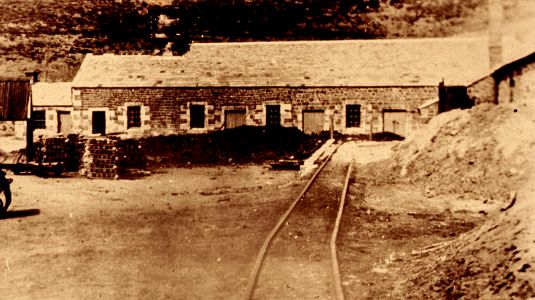
As landowner, the Duke of Buccleuch took an interest in the well-being of the Wanlockhead villagers and did as much as he could to lessen the problems associated with the lead mining industry. He ensured the smelting stages were removed from the village centre by building plant at Meadowfoot, where the flue system was ducted up the side of the nearby hillside. The photograph, taken in the 1930s, features the building where silver was skimmed from the molten lead by the cupellation process.
Leadhills and Wanlockhead are also interesting in respectively having the first and second oldest public lending libraries cum reading rooms in the UK. The former was opened in November 1741 and the latter in November 1756. Their book-stocks have a strong religious and self-improving bias.
The following pages refer to some of these mines in more detail:
Other sites of interest: